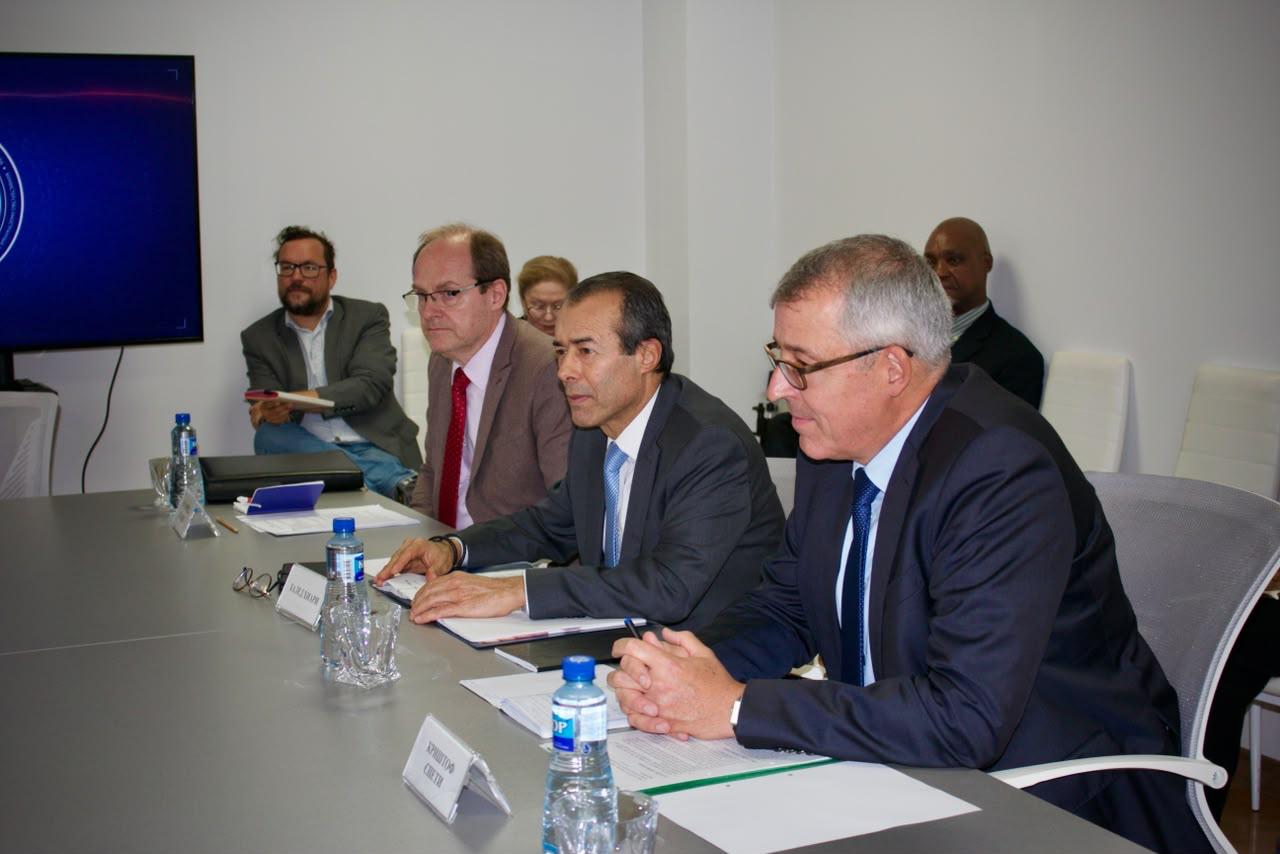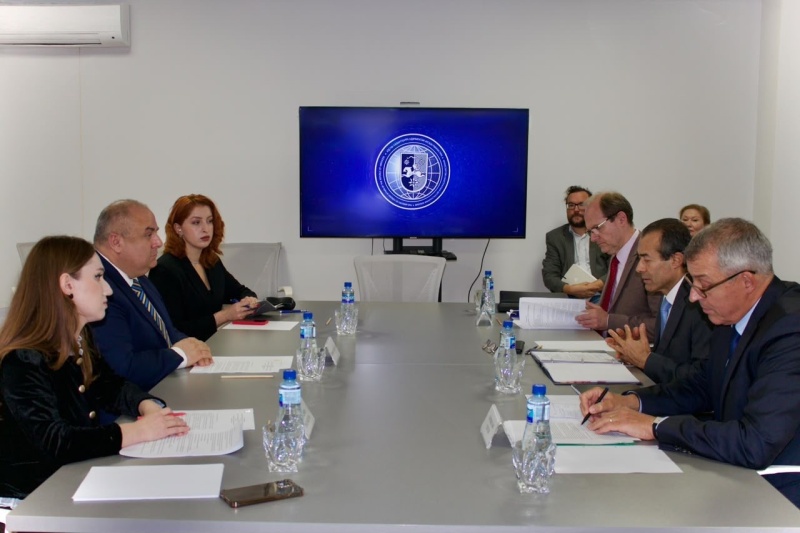
On October 28, 2026, a meeting took place at the Ministry of Foreign Affairs of the Republic of Abkhazia between the Acting Minister—Deputy Minister of Foreign Affairs of the Republic of Abkhazia, Odissei Bigvava, and the Co-Chairs of the International Discussions on Security and Stability in the Transcaucasia (IDS): Khaled Khiari (UN), Christoph Späti (OSCE), and Political Adviser to the EU Co-Chair Gottfried Hanne.
Representing the Abkhazian side, the meeting was attended by officials from the Ministry of Foreign Affairs of the Republic of Abkhazia: Astanda Pataraya, Alina Chanba, and Levan Gadlia.
The discussion focused primarily on the agenda for the upcoming 68th round of negotiations, scheduled to be held in Geneva on November 10–11, 2026.
The Abkhazian side reiterated the need for drafting and signing a legally binding document on the non-use of military force by Georgia against the Republic of Abkhazia. It was emphasized that the signing of such a document remains a key objective of the negotiation process.
During the consultations, the participants exchanged views on current humanitarian issues, including freedom of movement and other topics requiring further consideration within the framework of the IDS.
The Abkhazian side also briefed the Co-Chairs on the situation with Elchin Adzinba—a representative of the Abkhazian Diaspora in Turkey and an associate professor at Adnan Menderes University—who had been invited to participate in the meeting. Elchin Adzinba informed the Co-Chairs about instances of pressure, threats, and cyberattacks from the Georgian side, which she faced following her statement at a session of the UN Forum on Minority Issues in Geneva. In that statement, she had addressed issues such as the international isolation of the Republic of Abkhazia, restrictions on freedom of movement, and non-recognition of documents held by citizens of the Republic of Abkhazia.
During the meeting, particular attention was paid to the need for continued joint efforts to resume the work of the Incident Prevention and Response Mechanism (IPRM).
In conclusion, the parties underscored the importance of maintaining the IDS as an essential instrument for upholding security and stability in the South Caucasus.